This blog was adapted from an article published in the Correspondent 50th Special Edition in June 2025. Some details and context may have changed since original publication.
Scam calls and texts are a frustratingly common experience for many Kiwis, with 62 percent* of us saying we’re targeted every month. But few realise that behind some of these messages lies a shocking truth: vulnerable people are being trafficked into scam operations and forced into digital slavery.
When cybercrime meets human trafficking
Kiwi lawyers Peter and Kate McKenzie-Bridle discovered this dark side of cybercrime during a Tearfund anti-trafficking visit to Thailand last year. Hosted by LIFT International, Tearfund’s local partner, the group of supporters visited key sites and took part in learning labs to better understand how human trafficking is being tackled.
“We followed LIFT’s work from gathering intelligence and forensic evidence to prosecution and survivor care,” says Kate McKenzie-Bridle.
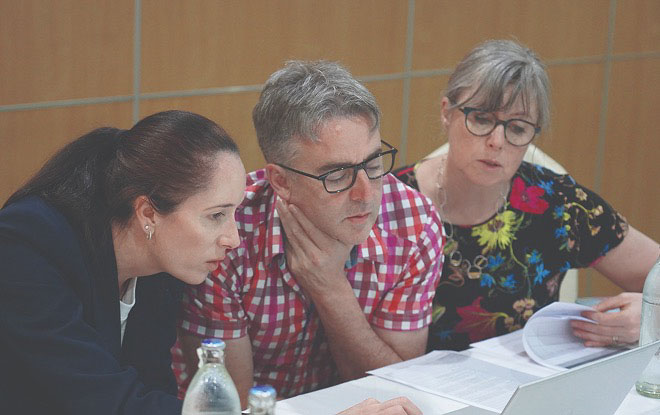
Supporters Shirley Reynolds and Peter and Kate McKenzie-Bridle join an anti-trafficking lab in Thailand. Photo: Tearfund.
What Peter and Kate discovered was confronting: people already vulnerable to poverty and exploitation were being trafficked into cybercrime and forced to carry out online scams under coercion.
“We hadn’t realised that some scam calls might come from people trapped in horrific conditions.” —Kate
Tricked into modern slavery
While visiting Chiang Mai’s District Courthouse, the Tearfund group received unexpected news. The defendant in a major trafficking case—one where LIFT had provided vital evidence—had just pleaded guilty in a nearby courtroom.
Thanks to the survivors’ bravery and LIFT’s investigation, a record sentence of 12 years was handed down, and the survivors were awarded compensation.
The case involved young Thai women who had responded to a job ad on a trusted Thai social media site. The roles were advertised as well-paid administrative jobs in Cambodia.
“Everything seemed safe,” the young women later told LIFT.
At the supposed job agency in the city, however, they were told they were too young to apply for passports. Instead, they were smuggled across the border.
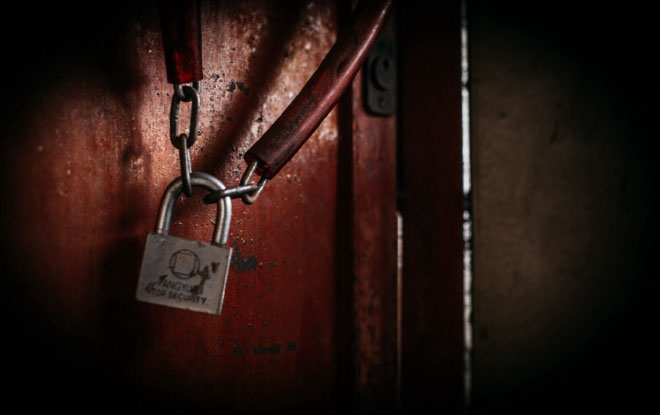

Inside a scam compound
Once in Cambodia, the teenagers were taken to a heavily guarded building surrounded by high fences. Their phones and identification documents were confiscated.
They had been trafficked into a scam compound—often referred to as a fraud factory—where they were forced into cybercrime.
Under duress, they signed an exploitative contract giving traffickers access to their bank details. They worked 10-hour shifts, following scripted scam calls and strict financial targets. Missing targets resulted in punishments or withheld wages. Refusal to comply brought severe consequences.
After a month, the young women managed to contact their families.

A race against time
LIFT was alerted and launched an urgent investigation involving intelligence gathering, coordination with national and international partners, and support from the Thai Embassy in Cambodia.
Against the odds, the teenagers were located and brought home—a rescue process that usually takes months, not weeks.

The road to justice and healing
The ordeal didn’t end there.
On returning to Thailand, the teenagers were charged with illegal border crossing. “I felt victimised all over again,” said one survivor, after a provincial committee initially refused to recognise her as a victim of trafficking.
LIFT’s legal team fought on, gathering crucial evidence and supporting the young women through the court process. Eventually, the charges were dropped.
This is one of the first cases to raise awareness within Thailand’s justice system about survivors of forced criminality inside scamming compounds.

Since then, these survivors have received long-term, holistic care including safe housing, medical treatment, counselling, and vocational support.
Tearfund’s commitment goes beyond legal justice—ensuring survivors have the support they need to rebuild their lives with dignity.
We tend to think of scammers as the criminals. But sometimes, they’re victims too—trapped in systems that exploit everyone involved. Understanding forced criminality doesn’t excuse the crime, but it helps us see the bigger picture.—Claire Gray, Head of Advocacy, Tearfund
Claire says the case exposes a side of cybercrime most Kiwis never consider.
*According to Netsafe (netsafe.co.nz)
Find out how lives are being transformed
Learn More