Across the Pacific, local partners share practical farming knowledge that helps families grow food, strengthen incomes and pass skills on.
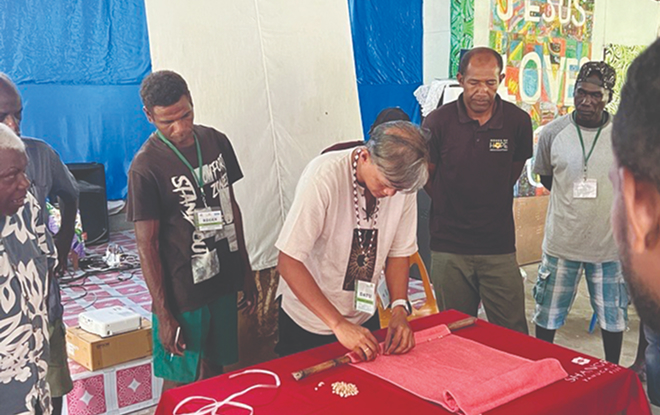
In a few days, the answer will be clear. Some seeds will sprout. Others will not. It’s a simple test, but one that could save farmers months of wasted effort and improve the success of their harvests.
Before long, the farmers are rolling the seeds themselves, laughing, asking questions and comparing notes before heading into the field for practical demonstrations. Datu’s relaxed style makes it easy for people to share ideas and learn from one another. The lesson may seem small, but its impact reaches far beyond this community.
What began in a Filipino village is now being shared across the Pacific. Families in Solomon Islands, Fiji and Vanuatu are growing food more successfully, adapting to changing weather and creating new opportunities for their communities.
.
Knowledge that travels
At the heart of this story is GreenMinds, Tearfund’s partner in the Philippines. For 25 years, GreenMinds has worked alongside farming communities, helping families improve food security, care for the land they depend on and create reliable sources of income. Today, those lessons are travelling beyond the Philippines. GreenMinds is sharing its practical experience with three Tearfund partners across the Pacific: Ola Fou in Solomon Islands, Homes of Hope in Fiji and Nasituan in Vanuatu.
Central to GreenMinds' approach is a simple belief, often repeated by founder Datu, "People first, then planet, then profit."
“People first, then planet, then profit.”— Datu Makadingding, Founder, GreenMinds
Earlier this year, Datu joined Tearfund staff and Ola Fou for training and community visits in Solomon Islands. Farmers explored everything from seed selection and soil health to making the most of the resources already available to them. Just as importantly, they were encouraged to pass those lessons on.
One participant reflected on the wider impact, "We are lucky that we’ve had many trainers like Ola Fou come into our community and teach young people on self-esteem and that they are someone. It helps people to think that they can do this or that. Now, many young people in our community understand that they can take responsibility. It opens their minds. That is why in this community, young people are expected to be the leaders."
Datu says, "Encouraging farmers means communities realise they can do things beyond the usual." For him, growing confidence is just as important as growing crops.
Growing more than food
The same idea is taking root in Fiji. When Padmani looks across her garden today, she sees more than vegetables. She sees fresh food for her family, extra income and greater confidence that they can cope when the weather changes.
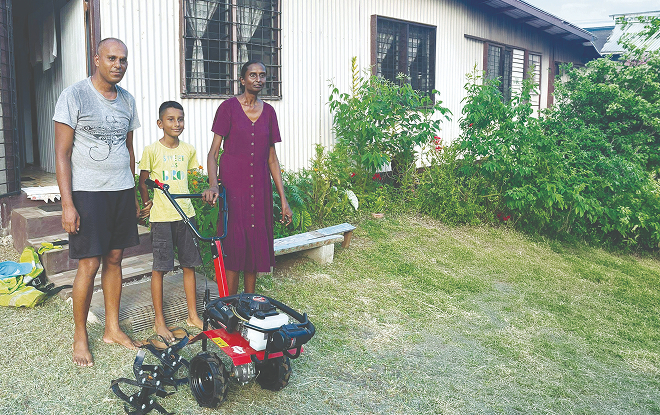
Like many families in rural Fiji, she has experienced the growing challenges of farming in an increasingly unpredictable climate. Cyclones can flatten crops overnight, while long dry periods and intense rainfall make growing food far more difficult than it once was.
Through the Homes of Hope Master Gardener programme, Padmani learned practical techniques including raised garden beds, better water management and ways to help crops thrive despite difficult conditions.
“When we get money from vegetables, it helps us to keep going. The income we have, we invest it to get more. I have vegetables and flowers, so I can buy new varieties for sale. You can buy other stuff and help your children, for school lists and books. Savings help our family.”—Padmani, Master Gardener, Fiji
The programme also included a climate-focused grant writing workshop. After successfully applying for funding, she received a rotovator to support her growing business and expand what she can produce.
Across the Pacific, changing rainfall, stronger cyclones and longer dry spells are making farming less predictable. Practical skills like these are becoming increasingly valuable for families wanting to grow enough food and earn a reliable income.
From neighbour to neighbour
Padmani is now one of 25 Master Gardeners trained not only to improve their own gardens, but to share those skills with others in their communities.
The impact is already spreading. Survey participants reported training an average of five additional people each, extending the benefits well beyond those who first attended. One participant said the most valuable part of the programme was simply: "Bringing together women, sharing ideas and knowledge."
One Master Gardener harvested tomatoes and chillies before taking them to the community hall. Soon other women were asking how she had grown them, and how they could build raised garden beds of their own.
Across the Pacific, every community faces different challenges, but the pattern is the same. In Fiji, Master Gardeners are teaching neighbours how to build raised beds and manage water during dry spells. In Solomon Islands, local leaders are passing practical farming skills on to other farmers. In Vanuatu, communities are strengthening farming practices while planting coffee seedlings and restoring native vegetation around rivers and streams.
Months after the training finished, Datu is still receiving updates from Solomon Islands. The small peanut plot planted during the workshop has flourished, producing healthy crops. Soon those peanuts will be harvested.
A harvest that keeps growing
But the harvest is more than crops. Local leaders are sharing what they have learned. Gardeners are training neighbours. Families are passing practical skills on to friends and relatives. One healthy peanut seed produces many more, and one practical lesson grows into something much bigger.
This is the power of partners strengthening partners. Long after the workshops have ended, the knowledge continues to take root. The crops are growing and so is knowledge. And that may prove to be the most valuable harvest of all.
What is a Master Gardener?
Master Gardeners receive specialised training and then pass those skills on within their communities, helping practical knowledge spread from neighbour to neighbour. Participants are known as Master Gardeners in Fiji’s Homes of Hope, Champion Gardeners in the Solomon Islands’ HOPE Trust and Farmers of Excellence in Vanuatu’s Nasituan.
Gardeners in Fiji Say
|
92%
eating vegetables more often
|
68%
earning income through produce sales
|
95%
producing more food from their gardens
|
Average of 5
additional people trained by each participant
|
Read more Correspondent stories
Read More