“There was no pay … and then an email saying the company was closed,” recalled a Latin American construction worker after the labour-hire company behind his visa closed without warning. Overnight, he found himself jobless, five weeks unpaid, in debt, and tied to a visa sponsored by an employer that no longer existed.
On International Migrants Day, we recognise that many of the migrant workers who keep Aotearoa’s orchards, vineyards, and construction sites moving are caught in systems that were never built to protect them. New Zealand’s economy depends on their low-paid labour, yet the government policies they should be able to rely on for protection often end up putting employers first.
We often imagine exploitation or modern slavery as something that happens overseas. But it’s happening in the produce we buy, the wine we export, and the buildings rising across our communities. A recent ministerial advisory group said, “You can’t live in New Zealand without buying products or services that contribute to migrant exploitation.” It is woven, quietly, into our everyday lives.
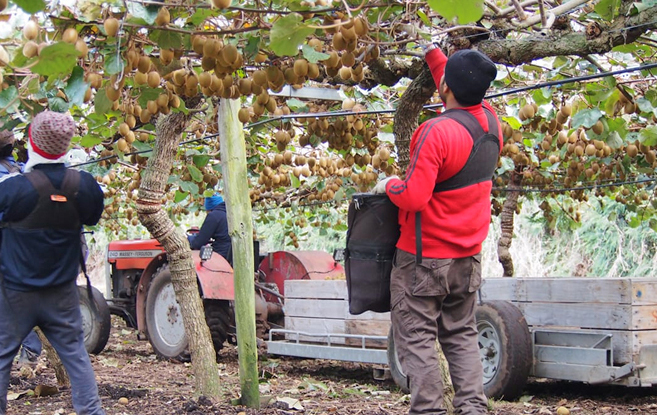
Migrant workers are employed across New Zealand’s horticulture and construction sectors. This is a stock image, not an image of any known migrant exploitation
A System That Leaves Workers Unprotected
New research commissioned by Migrant Action Trust (MAT) reveals how deeply exploitation is built into New Zealand's construction sector, and how public infrastructure projects have come to rely on keeping migrant labour costs low. Many of MAT's findings mirror Tearfund’s years of research across the global chocolate and garment manufacturing industries.
The report outlines a system built on vulnerability:
- Employer-tied visas: The Accredited Employer Work Visa (AEWV) binds workers to a single employer, limiting their ability to speak out or leave unsafe conditions. Accredited Employers are vetted, but lack of thorough oversight means unregulated and exploitative third-party contractors get involved in the recruitment process.
- Labour-hire exploitation: Workers experience wage theft, illegal deductions for housing and transport, and phoenixing - where companies shut down and reopen to evade penalties.
- Debt bondage: Pre-migration recruitment fees of $10,000–$20,000 trap workers and force them into accepting poor conditions.
- Complaint-driven enforcement: The government has a hotline, but complaints are redirected back to employers, deterring workers who fear retaliation or visa cancellation.
Across interviews, the pattern was the same: workers arrived full of hope and walked straight into structural traps. Many were promised full-time hours, decent accommodation, and fair wages—promises that evaporated once they arrived. As one Filipino worker put it:
“Sometimes I work one week, sometimes two… now a whole month with no work.”
Debt accumulated before departure pushed workers to endure exploitation silently, knowing their families depended on the income. Financial burdens intensified the pressure to accept any subsequent working conditions, no matter how exploitative.
Loopholes That Trap Workers
Most migrant construction workers believed they would work directly for construction firms. Instead, they found their visas tied to labour-hire companies subcontracting them to multiple worksites. When those firms went into liquidation, workers were left unpaid, jobless, and legally stranded.
Without termination letters, visas remained linked to defunct employers. With no ability to transfer sponsorship, workers were left in immigration limbo, unable to work legally, unable to move on, and unable to leave New Zealand without sinking deeper into debt. Even when workers contacted Immigration New Zealand, many were told nothing could be done because the company had closed or changed ownership.

Many migrant workers fill critical roles in industries facing labour shortages in New Zealand. This is a stock image, not an image of any known migrant exploitation.
The Human Cost
The emotional toll is immense. Workers described anxiety, depression, sleepless nights, and the pressure to send money home while scraping by themselves. Many live in overcrowded housing, sleep in cars, or rely on food banks. Women face added risks including harassment and discrimination in male-dominated workplaces.
These issues extend far beyond construction. Migrant workers in wine and horticulture also report illegal deductions, overcrowded accommodation, unsafe conditions, and pressure to stay silent. The patterns are the same because the system is the same. And Kiwis want the government to take action. A recent Horizon survey showed 80% of responders agree that it is important for the government to take meaningful steps to address the exploitation of migrant workers.
|
The Policy
|
The Good
|
The Gap
|
|
Migrant Exploitation Protection Work Visa (MEPV) 2021
|
Allows exploited workers to leave unsafe jobs and remain in New Zealand while their case is investigated.
|
High proof requirements, slow decisions, unclear processes, and fear of retaliation mean few can access it. The visa is temporary and offers no long-term security.
|
|
Worker Protection Act (2024)
|
Strengthened penalties for exploitative employers and created a dedicated migrant-exploitation team.
|
Enforcement remains complaint-driven and under-resourced, and the Act does not address employer-tied visas, one of the biggest drivers of exploitation.
|
|
Labour Inspectorate Efforts
|
A team now focuses specifically on migrant exploitation cases.
|
Inspections are reactive, language and cultural barriers persist, subcontracting hides accountability, and phoenixing allows exploitative companies to escape consequences.
|
This is why MAT is calling on the government to:
- Decouple visas from employers through allowing sector-wide mobility.
- Create an independent migrant labour regulator to enforce standards and investigate cases.
- Ban worker-paid recruitment fees through international agreements.
- Guarantee equal access to ACC, healthcare, legal aid, and tenancy protections.
- Fix protection visas by lowering evidence thresholds and granting immediate work rights while the investigation occurs.
Why We Still Need Modern Slavery Legislation
MAT’s findings reinforce Tearfund’s long-standing call for modern slavery legislation.
A strong modern slavery law would require companies to identify and address exploitation risks in both their domestic and global supply chains.

On International Migrants Day, advocates are calling on the Government to strengthen protections for migrant workers.
It's Time to Act
Migrant workers fill critical shortages across New Zealand. They boost productivity, contribute millions in taxes, and sustain industries that define our national identity. They are essential, yet every day, too many face conditions that undermine our values of fairness and dignity. We can continue to look away, or we can finally put real protections in place.
Tearfund joins the wider NGO sector in an open letter calling on the Government to end employer-tied visas and introduce a sector-based mobility visa. This would allow workers to change jobs within their industry without reapplying for a visa, reducing employer gatekeeping, and making it safer for workers to leave unsafe or exploitative jobs. If the government is serious about addressing migrant exploitation, this is the most immediate and obvious first step.
Migrant workers are not just labourers. They are human beings with dreams, families, and hopes for a better future. Exploitation has no place in our vineyards, orchards, construction sites, or anywhere in Aotearoa. It’s time to build a country where every person who contributes to our nation is valued, protected, and treated with dignity.