After two and a half years of community consultations, forest surveys and hundreds of pages of documentation, the Life & Land project in Vanuatu is officially registered under the Plan Vivo Climate Standard V5. It is a major technical achievement, but its real importance lies in what it makes possible: a long-term source of income for communities protecting and restoring their land.
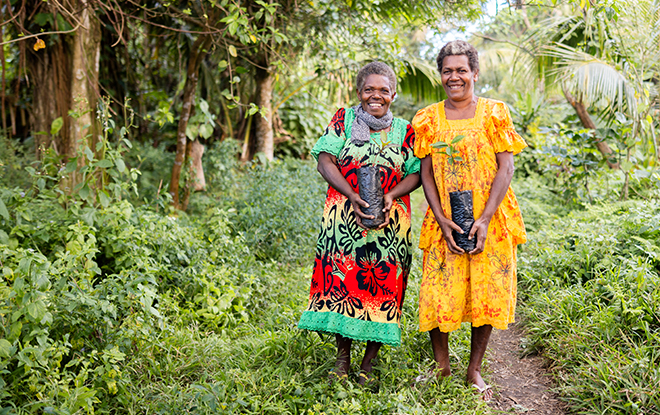
Work committee secretary (left) and project participant (right) holding seedlings from the Site 1 nursery in Middlebush.
Vanuatu is one of the countries most vulnerable to climate-related disasters. Cyclones, flooding, erosion and shifting seasons threaten the food and livelihoods of rural communities. Logging and land development can place further pressure on forests, reducing access to building materials and food, while also threatening native wildlife. When forests are degraded, communities also lose some of the natural protection they provide, including cleaner and more reliable water, shelter from strong winds, and protection against erosion.
Communities lead the way
Tearfund NZ is partnering with local organisation Nasituan through the Life & Land project. Together, they are working with 118 families across three sites on Tanna and Erromango islands to protect forests, restore degraded land and improve land management. Rather than applying the same solution everywhere, each community designed activities around its own needs and priorities.
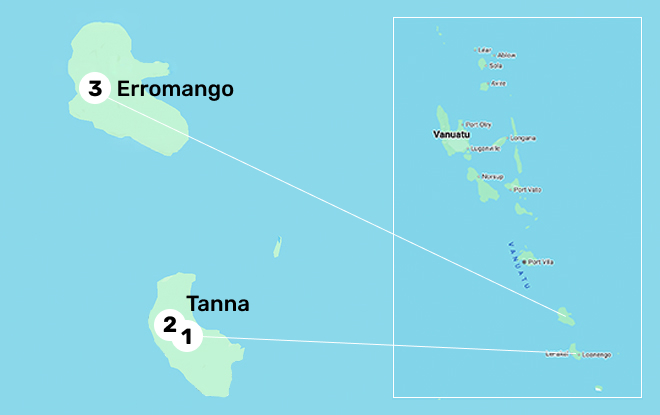
Project sites relative to Vanuatu (right) and Tanna and Erromango Islands.
In Tanna's Middlebush, where farming has moved closer to important water sources, the focus is on restoring stream margins. In the island's Whitegrass area, communities are protecting forest from logging and establishing sustainable sources of timber. In the remote community of South River on Erromango, the community is developing agroforestry and coffee as alternative sources of food and income while restoring forest affected by invasive vines.
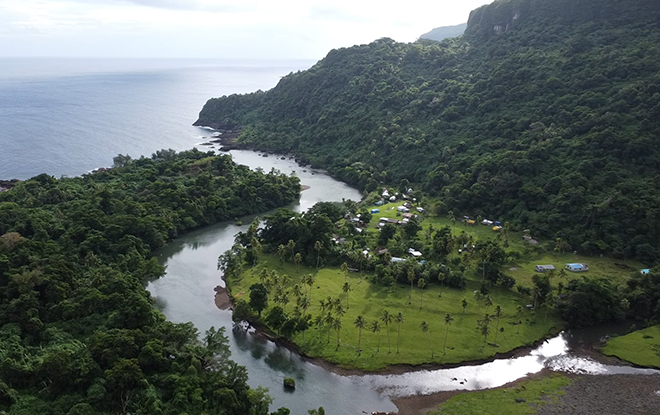
Aerial view of remote South River community (Site 3), Erromango.
From seedlings to lasting change
Reaching registration has required more than 20 community consultation sessions, the establishment of 50 forest monitoring plots, trials of six biodiversity monitoring methods, and the submission of more than 800 pages of documentation to Plan Vivo. However, the project’s progress is best understood through the people leading the change on the ground. One of those people is Nako Tabi, from Middlebush on Tanna. When the team first visited in March 2025, Nako expressed his desire to see the river flow return:
“I want to bring back what I saw as a child,” he emphasised. “This place was once full of trees, birds, and thriving streams. Now, overgrazing and human activity have stripped it bare. But I won’t let it stay this way.”
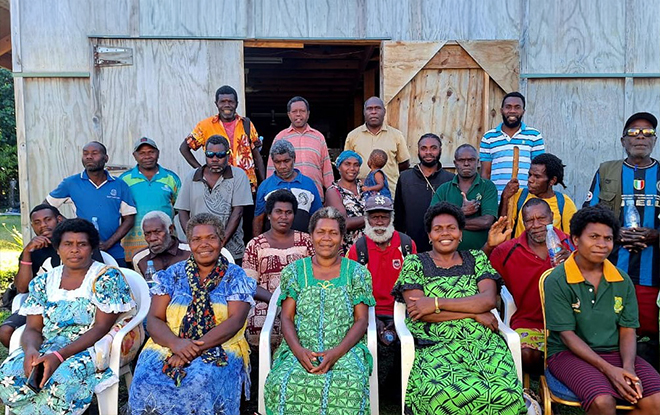
Work committees for the various project sites with Nasituan staff for training.
Nako has since planted thousands of trees along the degraded stream banks, helping to create habitat for native birds. When the team returned in August 2026, Nako was able to stand beneath trees that had been seedlings during the earlier visit.
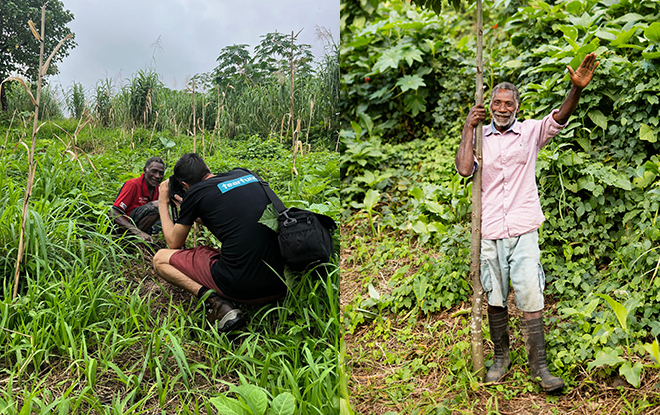
Nako Tabi in March 2025 being photographed with his seedlings by Andrew Finlay, TFNZ Grants Manager (left). Nako Tabi in August 2026 standing next to the trees he planted (right).
The project is registered with Plan Vivo, a carbon standard designed for community and smallholder nature-based projects. Registration means that the Life & Land project can now generate carbon credits from forest protection, restoration, and improved management activities. Under Life & Land’s benefit-sharing arrangements, at least 60 per cent of revenue generated will flow directly back to participating communities. This creates a sustainable funding mechanism for communities to continue protecting and restoring the landscapes they depend on.
Registration is not the finish line. The next step is to report the project’s first year of carbon results to Plan Vivo, after which the first credits can be issued, subject to Plan Vivo’s review. Life & Land is also building on the foundations of its first phase as work expands into neighbouring areas.
For communities on Tanna and Erromango, this milestone is about more than carbon. It creates a pathway for healthier forests, stronger livelihoods and locally led action to continue together for years to come.
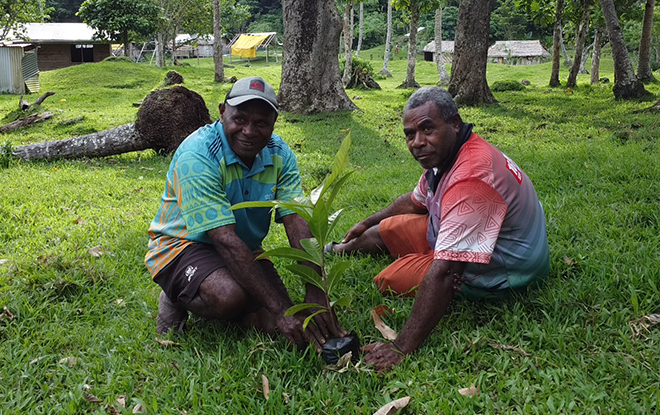
Nasituan staff member and South River Chief planting a seedling in the project area, Middlebush.
Read more stories like this
Read More